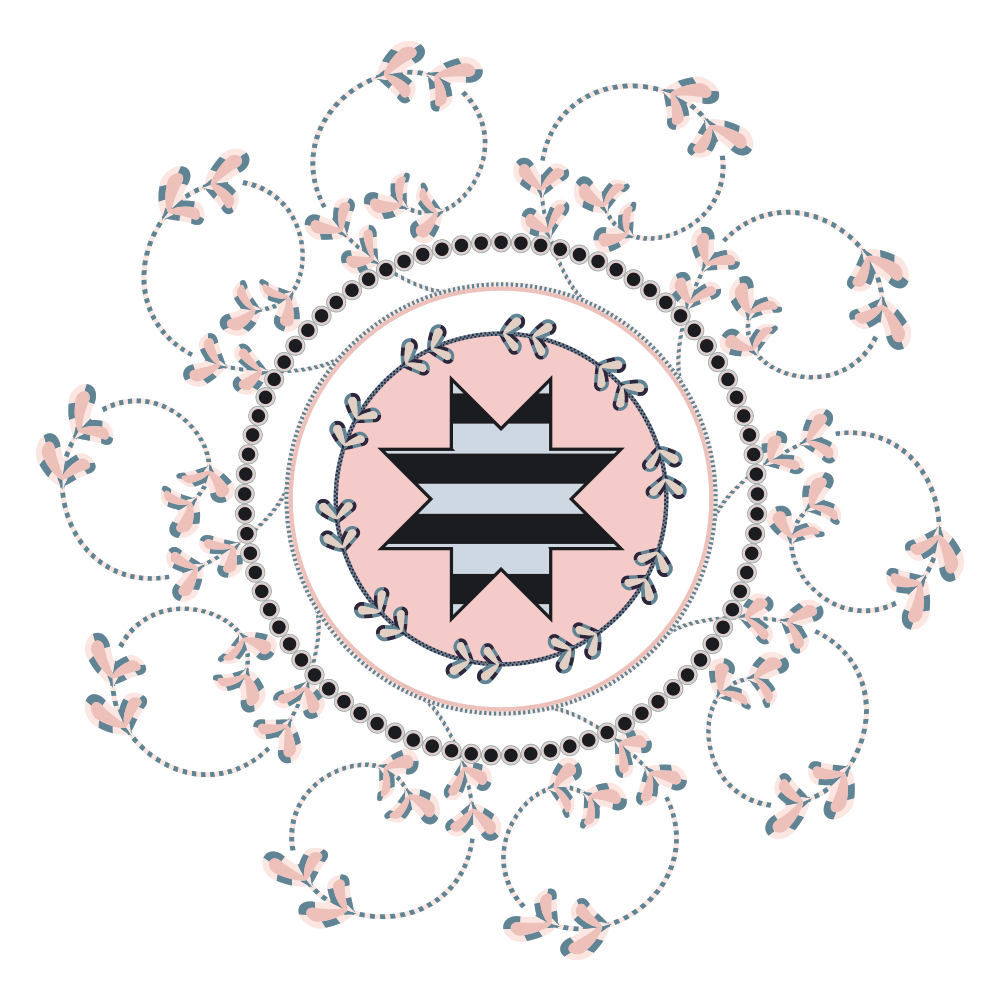


Aŋpétu Wí
In Dakota/Language stories, Wi refers to the Sun & Moon: Aŋpétu Wí (Morning Light), the solar version, is one of the more powerful spirits to the Oceti Sakowin. His wife is Haŋwí (evening light), the moon spirit. He is considered the leader of the spirits and he is represented by the color red.
Grown men may learn from very little children, for the hearts of little children are pure, and, therefore, the Great Spirit may show to them many things which older people miss.
Perhaps you have noticed that even in the slightest breeze you can hear the voice of the cottonwood tree; this we understand is its prayer to the Great Spirit, for not only men, but all things and all beings pray to Him continually in different ways.
~Black Elk

Wáǧačhaŋ
This piece incorporates symbols associated with Aŋpétu Wí . The Wáǧačhaŋ, cottonwood tree, is very sacred to the Oceti Sakowin: it is said that adults saw children building little houses from the Wáǧačhaŋ’s leaves and so that is how they learned to make tipis. Wáǧačhaŋ is also used at the center of the Sundance ceremony and is seen as the “Tree of Life” because of the star found hidden in the bark~

Wahčázi
Waȟčázi, or the sunflower, was formerly worn upon the chests as a medallion during the Sundance, instead of the four colors or the symbols as seen today. They are respected for their continuous prayers, as they follow Anpetu Wi’s journey across the sky. Anywhere a Waȟčázi grows is considered sacred ground.

Now on view at the Minneapolis Institute of Art.


